
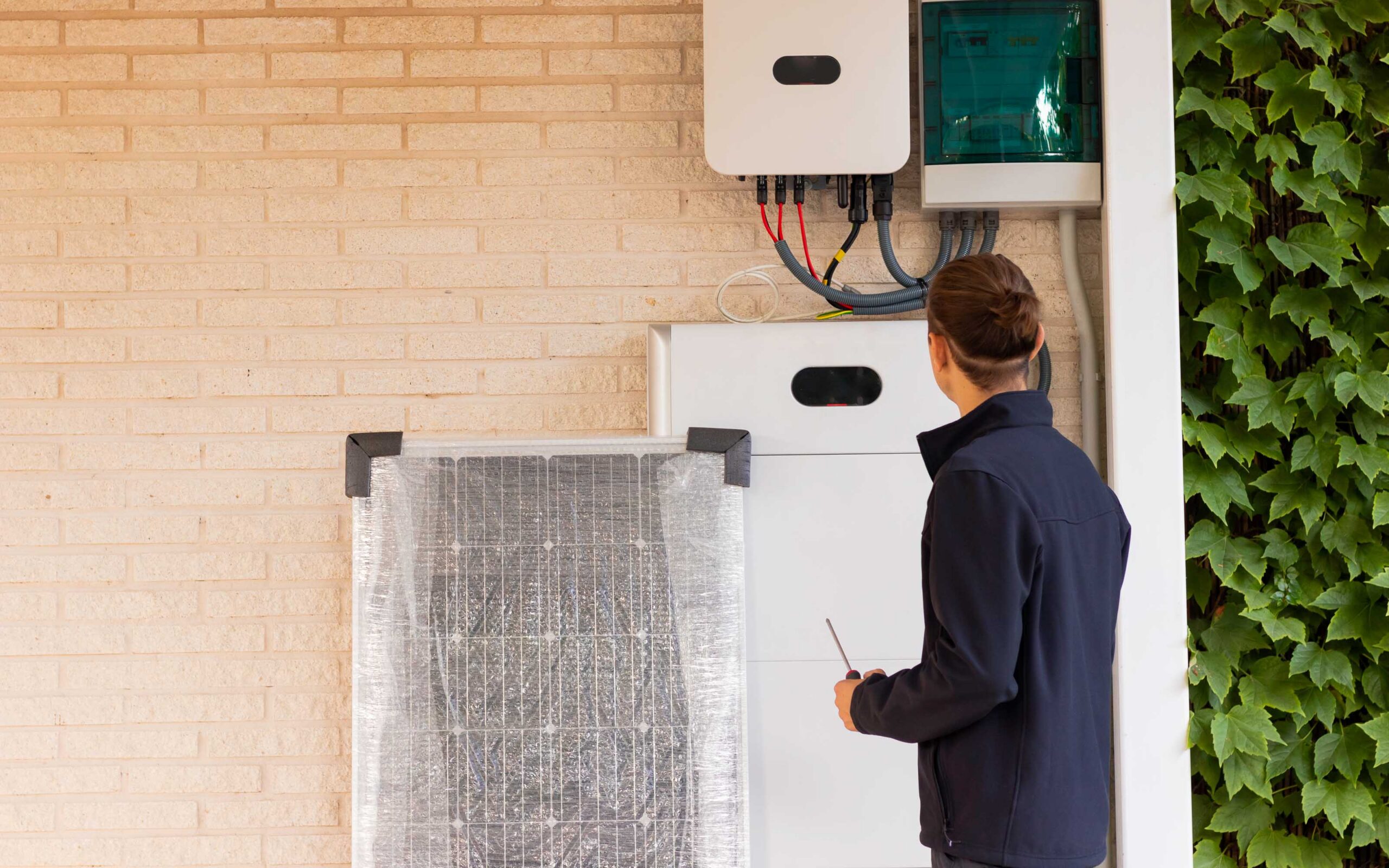
What is solar battery storage, and how does it work?
Solar battery storage allows homeowners to store excess electricity generated by their solar panels for later use. Instead of sending unused energy back to the grid, the system saves it for nighttime use, peak rate hours, or power outages.
In Arizona, where sunlight is abundant, solar panels often generate more electricity than a home needs during the day. A battery captures that surplus energy so it can be used when electricity rates are higher or when the grid goes down.
Most modern systems integrate with monitoring software, giving homeowners real-time control over how and when stored energy is used.
How much does a solar battery cost in Arizona in 2026?
The cost of solar battery storage in Arizona depends on the system size, brand, and installation complexity. In 2026, most homeowners can expect:
- $10,000 to $18,000 per battery system installed
- Federal tax credit of 30% still applies, reducing the total cost
- Additional costs may include electrical upgrades or panel integration
For example, a $14,000 battery system may drop to around $9,800 after incentives.
While this is a significant upfront investment, the long-term savings and energy security can offset the cost over time.
What is the ROI of solar battery storage in Arizona?
Return on investment for solar batteries depends on how electricity is billed and how energy is used in your home.
In Arizona, many utility companies use time-of-use (TOU) rates, where electricity costs more during peak hours. A battery allows you to avoid these high rates by using stored energy instead.
Key ROI factors:
- Avoiding peak electricity rates
- Reducing reliance on the grid
- Protection during outages
- Increased home energy independence
Typical ROI timelines:
- Without heavy peak usage: 10 to 15 years
- With smart energy usage: 7 to 10 years
Homes that consume more electricity in the evening benefit the most.
How long does it take for a solar battery to pay for itself?
The payback period depends on usage habits, electricity rates, and system size.
In Arizona, most homeowners see a payback period of:
- 7 to 12 years on average
- Faster if electricity rates continue to rise
- Slower if usage patterns do not align with peak pricing
Battery lifespan typically ranges from 10 to 15 years, which means many systems pay for themselves within their usable life.
Do you really need a solar battery in Tucson?
Not every homeowner needs a battery, but in Tucson, it can be especially valuable.
You may benefit from a battery if:
- You experience frequent power outages
- You are on a time-of-use utility plan
- You want greater energy independence
- You use most of your electricity at night
You may not need one if:
- Your utility offers strong net metering
- Your energy usage is mostly during the day
- You are focused only on the lowest upfront cost
In Tucson’s climate, solar panels alone provide strong savings, but adding a battery increases control and reliability.
How do solar batteries perform during Arizona summers and monsoons?
Arizona’s extreme weather makes battery storage more useful than in many other states.
During summer:
- Batteries help offset high air conditioning costs during peak hours
- They reduce strain on the grid when demand is highest
During monsoon season:
- Batteries provide backup power during outages
- They ensure critical appliances stay running
This added reliability is one of the biggest non-financial benefits of battery storage.
Are solar batteries worth it in Arizona in 2026?
For many homeowners, the answer is yes, but it depends on priorities.
Solar batteries are worth it if you value:
- Energy independence
- Protection from outages
- Long-term savings as electricity rates rise
They may be less essential if your goal is simply to reduce your electric bill with the lowest upfront investment.
As utility rates increase and grid reliability becomes more uncertain, battery storage is becoming a smarter long-term investment across Arizona.
Why more Arizona homeowners are adding battery storage in 2026
More homeowners are pairing solar panels with batteries because the energy landscape is changing.
Key trends include:
- Rising electricity costs across Arizona
- Increased adoption of time-of-use billing
- Growing demand for backup power solutions
- Advancements in battery technology and lifespan
These shifts make battery storage more practical and financially viable than in previous years.
Why choose Solar Pros AZ for solar battery installation in Tucson?
Choosing the right installer plays a major role in whether your solar battery system delivers real value over time. Solar Pros AZ is a locally owned company serving Tucson and the surrounding areas, known for delivering customized solar and battery solutions designed for Arizona’s climate and utility landscape.
Their licensed, bonded, and insured team evaluates your energy usage, utility rate plan, and long-term goals before recommending a battery system. This ensures you are not overspending on capacity you do not need, while still maximizing savings and backup reliability.
Solar Pros AZ uses high-quality equipment backed by strong manufacturer warranties, helping protect your investment for years to come. From system design to installation and ongoing support, their process is built to be straightforward and customer-focused.
For homeowners considering battery storage in 2026, working with an experienced local provider like Solar Pros AZ can make the difference between a system that simply works and one that truly optimizes savings, performance, and energy independence.
What factors impact solar battery performance in Arizona?
Solar battery performance in Arizona depends on several key factors, including extreme heat, system design, and usage patterns. High temperatures can affect battery efficiency over time, which is why proper installation and ventilation are critical. Working with experienced local providers like Solar Pros AZ ensures your system is designed specifically for desert conditions, helping maintain performance, lifespan, and long-term return on investment. Contact us today to learn more about solar battery solutions for your Arizona home.
Frequently Asked Questions
How long can a solar battery power a home?
Most solar batteries can power essential appliances for 8 to 24 hours, depending on usage and battery size. Homes that prioritize critical loads like refrigeration, lighting, and internet can extend backup time more efficiently.
Can I add a battery to my existing solar system?
Yes, many systems can be upgraded with battery storage. Some modifications may be required for compatibility. A professional assessment ensures your current system can safely support battery integration.
Do solar batteries require maintenance?
Solar batteries require minimal maintenance. Most systems are monitored digitally and designed for long-term use. Regular system checks and software updates can help maintain optimal performance over time.
Will a battery eliminate my electric bill?
Not completely. However, it can significantly reduce your bill, especially during peak rate hours. Savings depend on your energy usage, system size, and local utility rate structure.
What is the lifespan of a solar battery?
Most solar batteries last between 10 and 15 years, depending on usage and brand. Proper installation and climate-appropriate setup can help maximize battery lifespan in Arizona conditions.