
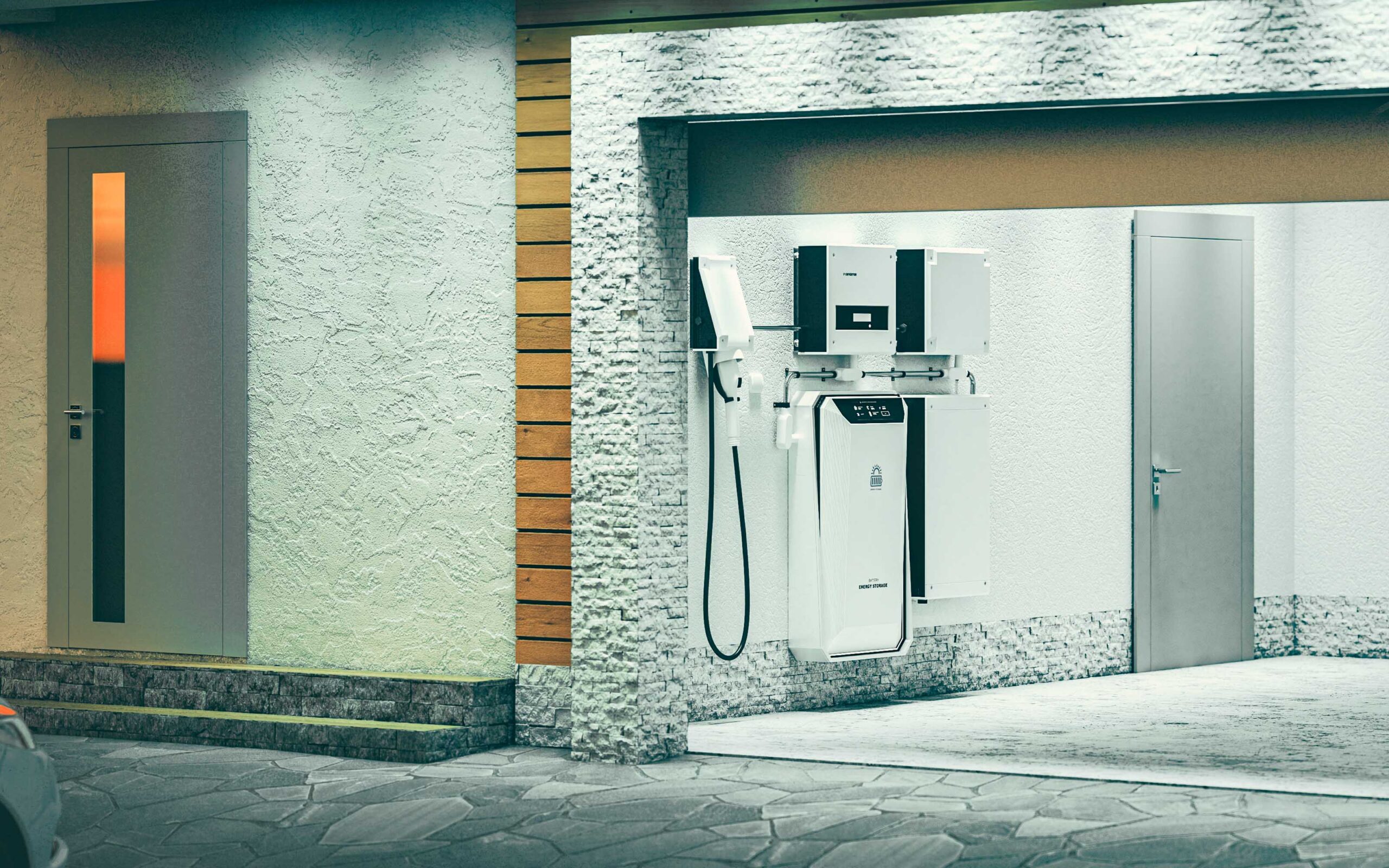
For many Tucson homeowners, yes. A solar battery can keep your refrigerator, lights, internet and other essential circuits running when monsoon storms knock out power. It also lets you use your own stored solar energy after sunset instead of sending it to TEP at a lower export credit. How much value you get depends on what you want to back up.
At Solar Pros AZ, we design battery systems for Tucson homes with new solar installations, existing solar systems, or as standalone backup. Every system is sized around what your household actually needs to keep running, which is the most important part of getting battery backup right.
Why do monsoon storms cause power outages in Tucson?
Arizona’s monsoon season officially runs from June 15 through September 30. The storms that roll through Tucson during those months can bring lightning, microbursts, dust and sudden heavy rain, and any of those can damage power lines or equipment and take out service to a neighborhood.
The timing is what makes these outages hard. Monsoon storms usually build in the late afternoon and evening, right when homes are running air conditioning hardest. Losing power on a 105-degree evening means losing cooling, refrigeration and the internet connection you might need for work.
Why don’t solar panels work during a power outage?
A standard grid-tied solar system shuts off automatically when the grid goes down. This is a required safety feature that keeps your panels from sending electricity into power lines while utility crews are working on them. So even on a sunny afternoon, solar panels alone won’t power your home during an outage.
A battery changes that. With the right backup equipment, your home disconnects from the grid during an outage and runs on stored energy, and your solar panels can keep producing to recharge the battery.
How does a solar battery work during a monsoon outage?
On a normal day, your solar panels power your home and charge the battery. When the grid goes down, the system detects the outage and switches your designated backup circuits to battery power, usually within a fraction of a second. Most homeowners barely notice the switch.
The key word is designated. During installation, your installer sets up which circuits the battery will support. Some homes back up only essential loads through a separate backup panel, while others with larger battery capacity can back up the whole house.
What can a solar battery power during an outage?
Depending on battery capacity and how your system is set up, backup loads commonly include:
- Refrigerators and freezers
- Lights and ceiling fans
- Internet router and modem
- Security systems and garage door openers
- Selected outlets for phones, laptops and small appliances
- Well pumps or medical equipment
- Some or all of your air conditioning
The more you want to power, and the longer you want it to last, the more battery capacity you’ll need.
Can a solar battery run your air conditioner?
It can, but air conditioning is the biggest load in most Tucson homes and needs careful planning. A central AC unit draws far more power than a refrigerator or lights, and it needs a surge of extra power every time the compressor starts. The battery system has to handle both the ongoing draw and that startup surge.
Some homeowners choose enough battery capacity to run their full HVAC system. Others back up a single smaller unit or mini-split so at least one room stays cool. A soft starter installed on the AC unit can also reduce the startup surge, which sometimes makes it possible to run cooling on a smaller battery setup.
How much battery storage do you need?
The right size comes down to a few questions:
What has to stay on? Start with a list of the equipment you can’t go without during an outage. A fridge, lights and Wi-Fi need far less capacity than a whole-home setup with central air.
How much power do those items draw at once? The battery needs enough output to run everything on your list at the same time, not just enough stored energy.
How long do you want backup to last? A two-hour evening outage and an overnight outage call for very different amounts of storage.
Can your solar panels recharge the battery? If an outage stretches into the next day, solar production can refill the battery and extend your backup time.
Your past TEP bills also help here, since they show how much electricity your home uses by season.
Will solar panels recharge a battery during a monsoon storm?
Panels still produce some electricity under cloud cover, just less than on a clear day. During a heavy storm with thick clouds and rain, production can drop sharply, so you shouldn’t count on your panels to recharge the battery while the storm is still overhead.
That’s why it matters to go into a storm with a full battery. Monsoon storms tend to pass fairly quickly, though, and Tucson usually sees sun again the next morning, which is when your panels can start refilling the battery.
Is a solar battery worth it beyond outage protection?
For Tucson homeowners, there’s a second reason batteries make sense. TEP uses net billing, which means excess solar power you send to the grid is credited at an export rate that’s lower than what you pay for electricity from TEP. Without a battery, much of your midday solar production goes to the grid at that lower rate, and you buy power back in the evening at the full retail price.
A battery lets you store that midday energy and use it yourself in the evening, when your AC is still running and electricity is more valuable to you. How much this saves depends on your usage, your TEP rate plan and your system size.
TEP also has an Energy Storage Rewards program that pays enrolled customers for letting the utility draw on their battery during periods of high demand. Eligibility depends on the program rules and your battery system, so ask us whether your equipment qualifies.
Is a solar battery better than a generator?
Both provide backup power, but they work differently. A battery switches on automatically, runs silently, needs no fuel and can be recharged by your solar panels. It also earns value every day through net billing, not just during outages.
A generator can run as long as you keep it fueled, which makes it useful for very long outages. It also needs regular maintenance, makes noise, and has to be run outdoors because of exhaust. For homeowners who already have solar or are planning it, a battery usually fits more naturally into how the home already uses energy.
How should you prepare your solar battery for monsoon season?
A few steps before the storms arrive can make a big difference:
- Check your battery’s backup reserve setting in your monitoring app. Raising the reserve during monsoon season keeps more energy set aside for outages.
- Turn on any storm alert feature your battery offers. Some systems automatically charge to full when the National Weather Service issues a severe weather warning for your area.
- Confirm which circuits are backed up so you know what will and won’t work during an outage.
- Look at your monitoring app for any error messages or unusual behavior, and call your installer if something seems off.
What are the limitations of solar battery backup?
A battery holds a set amount of energy. If an outage lasts long enough and there isn’t enough sun to recharge it, the battery can run out. Batteries also add cost to a solar project, so the payoff looks different from one home to the next. Homeowners who rarely lose power and use most of their solar production during the day may see less benefit than those who deal with frequent outages or heavy evening usage.
Frequently Asked Questions
How long will a solar battery last during a power outage?
It depends on the battery’s usable capacity and what you’re running. A battery powering only a refrigerator, lights and Wi-Fi can last much longer than one running central air. Your installer can estimate runtime for your specific backup loads.
Can I add a battery to my existing solar system?
In many cases, yes. Whether it’s a simple add-on depends on your current inverter and system setup, and some systems need additional equipment to support a battery.
Can I get a battery without solar panels?
Yes. A standalone battery can charge from the grid and provide backup during outages. Pairing it with solar adds the ability to recharge from your own panels and use stored solar energy in the evening.
Should I rely on a solar battery for medical equipment?
A battery can be a strong source of backup for medical devices, but it shouldn’t be your only plan. Talk with your installer about sizing the system for your equipment and keep a secondary backup plan in place for extended outages.
Get Ready for the Next Monsoon Outage
If keeping your home running during monsoon storms matters to you, a battery evaluation will show you what size system fits your home and what it can realistically back up. Solar Pros AZ is a licensed, bonded and insured Tucson solar company with an A+ BBB rating. Call 520-549-6200 or request a free evaluation to talk through your options. You can also learn more about residential solar and battery storage on our website.